
Computers tend to give subtle warnings long before a major problem appears. A program takes a little longer to open than it did last month. Storage starts filling up faster than expected. The cooling fan runs more often, or the browser feels less responsive even though only a few tabs are open. Because these changes happen gradually, it’s easy to assume they’re simply part of owning a computer.
In reality, many common computer problems develop over weeks or months, not overnight. Temporary files accumulate, software falls behind on updates, startup applications multiply, and important backups quietly stop working. On their own, none of these issues may seem urgent, but when combined, they can impact performance, reliability, and even data security.
The good news is that keeping a computer in good condition doesn’t require advanced technical skills or expensive software. A consistent monthly maintenance routine can help identify small issues before they become disruptive, allowing your system to remain reliable for work, study, entertainment, or everyday tasks. Most of these checks take only a few minutes, yet they can save hours of troubleshooting later.
Start With a Quick Check of Available Storage
One of the simplest maintenance habits is checking how much free space remains on your primary drive. Storage doesn’t just determine how many files you can save—it also affects how comfortably your operating system and applications can perform everyday tasks.
Rather than waiting until the computer displays a low-storage warning, review your available space once a month. If you notice storage shrinking faster than expected, take a closer look at what’s consuming it.
Large downloads, duplicate files, outdated installers, and forgotten videos often occupy far more space than people realize. Sometimes the issue isn’t a lack of storage but simply a lack of organization.
Instead of deleting files immediately, separate what you genuinely need from what no longer serves a purpose. Important documents and family photos deserve careful consideration, while temporary downloads and duplicate copies may simply be taking up valuable space.
A little organization each month is far easier than trying to clean up years of accumulated clutter all at once.
Install Updates Before They Become a Long List
Software updates are easy to postpone. A notification appears while you’re busy, you choose “Remind me later,” and before long several weeks have passed without another thought.
Unfortunately, delaying updates for too long can leave your computer running software that misses important bug fixes, compatibility improvements, and security updates.
A practical approach is to dedicate part of your monthly maintenance session to checking for updates across your system.
Review updates for:
- Your operating system.
- Frequently used applications.
- Web browsers.
- Device drivers, when recommended by your computer manufacturer.
- Security software.
Installing updates regularly helps reduce unexpected issues while ensuring that applications continue working well together. You don’t need to chase every update the moment it’s becomes available, but ignoring them for months can create avoidable problems.
Organize Your Files Instead of Letting Them Pile Up
Digital clutter builds much like physical clutter. A document downloaded for one project remains in the Downloads folder. Screenshots taken months ago stay on the desktop. Old installers, duplicate photos, and outdated presentations continue occupying space long after they’ve stopped being useful.
Rather than waiting until you can’t find an important file, spend a little time organizing recently added content.
A simple folder structure often makes everyday work much easier.
| Folder | Recommended Contents |
|---|---|
| Documents | Reports, letters, PDFs, spreadsheets |
| Projects | Active work or study materials |
| Photos | Personal images and media |
| Downloads | Temporary files waiting for review |
| Archive | Older files you rarely access but want to keep |
Keeping similar files together reduces search time and also makes backups more straightforward because important information is already organized logically.
Review Which Programs Start Automatically
Many applications quietly add themselves to your computer’s startup process during installation. At first, this isn’t usually noticeable. Over time, however, dozens of background applications can increase startup times and consume memory before you’ve even opened the programs you actually want to use.
A monthly review helps you decide which applications truly need to launch automatically.
The goal isn’t to disable everything. Security software, hardware utilities, and essential services often need to start with the system. Instead, focus on applications that you rarely use immediately after turning on your computer.
Reducing unnecessary startup programs can improve responsiveness while keeping your computer focused on the tasks that matter most.
Confirm That Your Backups Are Actually Working
Many people assume their files are being backed up because they enabled a backup feature months ago. Unfortunately, backups can fail without being immediately obvious. An external drive may have been disconnected, cloud synchronization may have paused, or storage limits may have been reached.
Once each month, verify that your backup system is functioning properly.
A useful backup review includes checking whether:
- Recent files are included.
- Synchronization completed successfully.
- External backup drives are accessible.
- Important folders haven’t been excluded accidentally.
- A few backed-up files can actually be opened.
This final point is often overlooked. A backup only provides value if your files can be restored when needed.
Spend a Few Minutes Reviewing Computer Security
Security isn’t only about protecting against malware. It’s also about making sure your computer isn’t gradually becoming more vulnerable through everyday use.
Over time, browser extensions accumulate, unused software remains installed, and old accounts stay signed in across multiple applications. Reviewing these areas once a month helps keep your system cleaner and easier to manage.
During your review, consider questions like these:
- Are there programs you no longer use?
- Do all browser extensions still serve a purpose?
- Is your security software active and updated?
- Have important accounts enabled strong authentication methods?
- Are there any unexpected login notifications or account alerts worth reviewing?
You don’t need to become overly cautious or suspicious of every notification. The objective is simply to remain aware of changes that could affect your computer’s security over time.
Don’t Forget the Physical Condition of Your Computer
Software maintenance is only part of keeping a computer reliable. Dust, poor ventilation, and neglected peripherals can also contribute to long-term problems.
Take a few minutes to inspect the physical condition of your workspace and equipment.
For example, make sure air vents aren’t blocked by books, papers, or other objects. If you use a desktop computer, check that dust hasn’t accumulated around ventilation openings. Laptop users should avoid placing the device on soft surfaces for extended periods, as this can restrict airflow and increase operating temperatures.
You should also look over accessories such as keyboards, mice, charging cables, and external drives. A loose cable or worn connector may seem insignificant today but can become an unexpected source of frustration later.
Review the Programs You No Longer Use
It’s common to install software for a specific task and then forget about it once that task is complete. Over time, these unused applications can occupy valuable storage, add background services, or occasionally create conflicts with newer software.
A monthly review of installed programs helps keep your computer organized without turning software management into a major project.
Instead of removing applications simply because you haven’t opened them recently, think about whether they still serve a purpose. Some programs are used only a few times a year, while others may have been replaced by better alternatives without you realizing it.
As you review your software, ask yourself:
- Have I used this application in the past few months?
- Is another program already performing the same job?
- Does this software still receive updates?
- Was it installed temporarily for a single project?
Removing applications you genuinely no longer need can simplify your system and make it easier to manage in the future.
Check Your Web Browser’s Health
For many people, the web browser is the most frequently used application on the computer. If it becomes slow or cluttered, the entire system can feel less responsive, even when the underlying hardware is working normally.
A monthly browser review can improve both performance and organization.
Take a few moments to look through your extensions and bookmarks. Browser extensions are useful, but installing too many can affect browsing speed or create compatibility issues. If you no longer remember why an extension was installed, it’s worth reviewing whether you still need it.
Bookmarks also deserve occasional attention. Removing broken links and organizing frequently visited websites into folders makes everyday browsing more efficient, especially if you rely on the browser for work or study.
You don’t need a perfectly organized browser—just one that helps rather than slows you down.
Pay Attention to System Performance Trends
A computer doesn’t need to be benchmarked every month to reveal potential problems. Often, simply paying attention to everyday performance provides valuable insight into the system’s overall health.
Think about how the computer behaves during tasks you perform regularly. If it now takes significantly longer to start, open common applications, or transfer files than it did a few months ago, it’s worth investigating before assuming it’s simply “getting old.”
Likewise, unusual fan noise, frequent freezing, or repeated application crashes shouldn’t be ignored if they begin appearing regularly.
A few warning signs that deserve attention include:
- The computer takes noticeably longer to start.
- Applications freeze during routine work.
- Storage fills unusually quickly.
- Fans run constantly during light tasks.
- Error messages appear more often than before.
These symptoms don’t always indicate a serious problem, but they do suggest that further investigation may be worthwhile before the issue becomes more disruptive.
Keep Your Desktop and Workspace Manageable
A crowded desktop may not affect performance dramatically on every computer, but it often affects productivity. Searching through dozens of icons wastes time and makes important files harder to locate.
Try to keep only the shortcuts and documents you actively use on the desktop. Everything else can be organized into folders where it’s easier to find later.
Your physical workspace deserves similar attention. Dust, tangled cables, and poor ventilation can make routine computer use less comfortable and may even contribute to hardware wear over time.
Simple habits such as wiping down your keyboard, cleaning your monitor with appropriate materials, and keeping vents unobstructed help maintain both the computer and the environment around it.
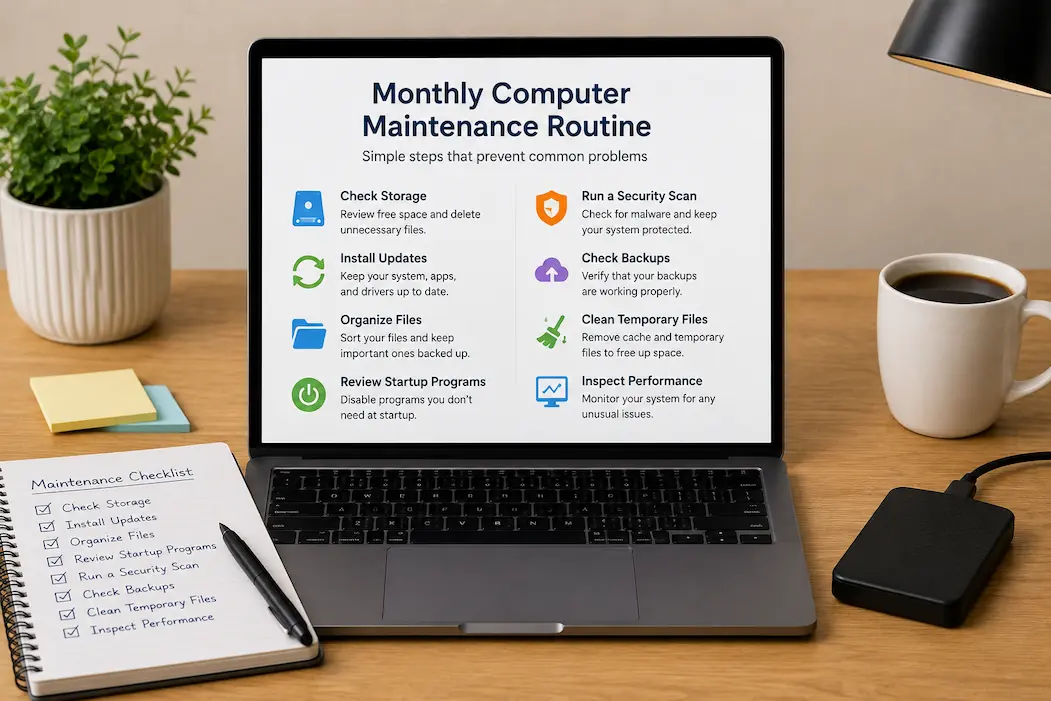
Create a Monthly Maintenance Checklist
Having a routine is much easier than trying to remember individual maintenance tasks throughout the year. A simple checklist helps ensure that important steps aren’t overlooked during busy periods.
Here’s an example you can adapt to your own needs:
| Monthly Task | Completed |
|---|---|
| Review available storage | ☐ |
| Install operating system and software updates | ☐ |
| Organize recently added files | ☐ |
| Review startup applications | ☐ |
| Confirm backups are working | ☐ |
| Check browser extensions and bookmarks | ☐ |
| Remove unnecessary software | ☐ |
| Review computer security settings | ☐ |
| Clean keyboard, screen, and ventilation areas | ☐ |
| Watch for unusual performance changes | ☐ |
Saving this checklist or adding it to your calendar makes it easier to maintain the habit throughout the year.
Common Maintenance Mistakes to Avoid
Good maintenance isn’t just about what you do—it also involves avoiding habits that can create unnecessary problems.
Some of the most common mistakes include:
| Mistake | Better Approach |
|---|---|
| Ignoring update notifications for months | Review and install updates during your monthly routine |
| Deleting files without checking what they contain | Review files carefully before removing them |
| Installing software from unfamiliar sources | Download applications from trusted providers whenever possible |
| Never checking backups | Verify that backups are running and that files can be restored |
| Waiting until the computer feels unusable | Address small issues while they’re still easy to resolve |
Avoiding these habits often prevents more problems than any single maintenance tool or utility.
Frequently Asked Questions
How long should a monthly computer maintenance session take?
For most home users, 30 to 60 minutes is usually enough. The exact time depends on how much data you manage and whether major software updates are available.
Should I perform maintenance even if my computer seems to work fine?
Yes. Preventive maintenance is intended to identify small issues before they become noticeable. Waiting until problems appear often means more time spent troubleshooting later.
Do I need special maintenance software?
Not necessarily. Most operating systems already include tools for managing storage, installing updates, and monitoring basic system health. Good maintenance habits are generally more valuable than installing numerous optimization utilities.
How often should I clean the outside of my computer?
Light cleaning once a month is a practical routine for most environments. If your workspace is especially dusty or you have pets, you may benefit from checking vents and peripherals more frequently.
Is restarting my computer part of good maintenance?
Yes. Restarting the computer periodically helps complete software updates, refresh system processes, and resolve temporary issues that may develop during extended use.
Final Thoughts
Keeping a computer reliable doesn’t require advanced technical knowledge or complicated maintenance routines. Small, consistent habits often have a greater long-term impact than occasional intensive cleanups performed only after problems appear.
By reviewing storage, installing updates, organizing files, confirming backups, monitoring performance, and paying attention to both software and hardware, you create a routine that helps prevent many common issues before they interrupt your work. Over time, this proactive approach not only improves reliability but also makes your computer easier to use, easier to maintain, and better prepared for the tasks you rely on every day.